

Blog
Is Your ‘Normal’ Tingling Actually a Warning Sign? What Doctors Say vs. What People Ignore

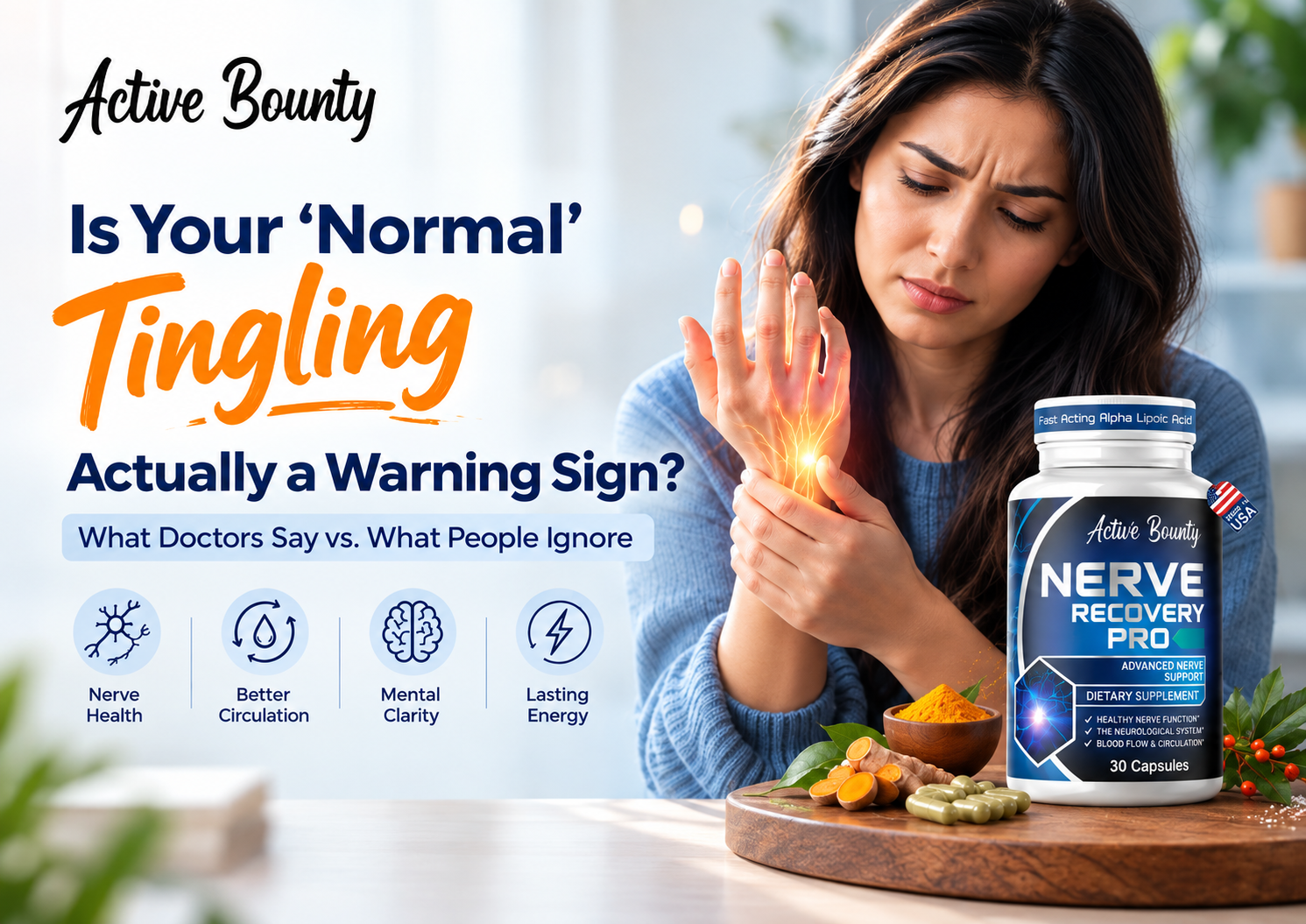
Is Your "Normal" Tingling Actually a Warning Sign? What Doctors Say vs. What People Ignore
You're sitting at your desk, and suddenly your fingertips start to buzz. Or maybe your foot "falls asleep" for the third time this week. You shake it off, flex your hand, and move on with your day.
Most of us have been trained to treat tingling as background noise — something to shake away, not something to think about. But here's the uncomfortable truth: that tingling, numbness, or "pins and needles" feeling (doctors call it paresthesia) is your nervous system trying to send you a message. Sometimes the message is harmless. Sometimes it isn't.
In this article, we'll break down what's actually normal, what doctors quietly worry about, and the everyday habits that are silently affecting your nerve health — plus what you can do about it starting today.
What Exactly Is "Tingling," Medically Speaking?
Tingling is a form of paresthesia — an abnormal sensation caused when a nerve is compressed, irritated, or not getting the signals it needs to function properly. It can feel like:
- Pins and needles
- A mild electric buzz
- Numbness or "dead" skin
- A crawling or prickling sensation
Occasionally, it's completely explainable — you slept on your arm wrong, or you crossed your legs too long and cut off circulation for a few minutes. But when tingling becomes frequent, spreads, lingers, or shows up without an obvious trigger, it usually points to something happening deeper in your peripheral nervous system.
The "Normal" Tingling Most People Ignore
Here's where it gets tricky. A lot of genuinely low-risk tingling gets dismissed for the wrong reasons — and some genuinely concerning tingling gets dismissed because people assume it's the harmless kind. A few common (and usually harmless) triggers:
- Positional pressure — sitting cross-legged, sleeping on your arm, or wearing tight shoes
- Temporary poor circulation from cold weather or prolonged inactivity
- Mild vitamin fluctuations from a skipped meal or dehydration
- Post-workout tingling from muscle fatigue or lactic acid buildup
If it resolves in a few minutes once you move or change position, it's usually your body's normal response to temporary pressure — not a red flag.
What Doctors Actually Watch For
According to neurologists and physicians, the difference between "ignore it" and "get it checked" often comes down to pattern, duration, and spread. Here's what tends to raise a doctor's eyebrow:
Tingling That Doesn't Go Away
If numbness or tingling in your hands, feet, or legs lasts for hours or recurs daily without an obvious cause, it may signal peripheral neuropathy — nerve damage that's often linked to diabetes, vitamin B12 deficiency, or chronic alcohol use.
Tingling That Spreads or Moves
Sensations that start in one spot and gradually spread — say, from your fingertips up your arm — can indicate nerve compression (like carpal tunnel syndrome) or, in rarer cases, a more systemic neurological issue.
Tingling With Other Symptoms
Doctors pay close attention when tingling shows up alongside:
- Muscle weakness
- Balance problems
- Vision changes
- Slurred speech or facial drooping (this combination requires immediate emergency care, as it can indicate a stroke)
Symmetrical "Glove and Stocking" Numbness
Tingling that affects both hands or both feet in a mirrored pattern is a classic sign doctors associate with diabetic neuropathy or B12 deficiency, since it reflects damage happening at the nerve endings rather than a single pinched nerve.
Why People Ignore the Warning Signs
It's not that people don't notice — it's that modern life makes it easy to explain away. A few reasons doctors say patients wait too long:
- "It's probably just my posture." — True sometimes, but repeated dismissal delays diagnosis of nerve compression or poor circulation.
- "I'm just getting older." — Age-related nerve slowdown is real, but persistent tingling isn't an inevitable part of aging — it's often a sign of something addressable, like a nutrient gap or blood sugar issue.
- "It comes and goes, so it can't be serious." — Intermittent symptoms are actually how many nerve conditions start, well before they become constant.
- No obvious pain. — People associate nerve problems with pain, but numbness and tingling are often the earlier, quieter symptoms of nerve stress — long before pain sets in.
Supporting Nerve Health Before It Becomes a Bigger Problem
The encouraging news: for a large percentage of people, tingling linked to nerve stress, poor circulation, or nutrient gaps responds well to consistent lifestyle changes and targeted nutritional support — especially when addressed early.
A few doctor-backed habits that support long-term nerve function:
- Manage blood sugar — since fluctuating glucose is one of the most common (and preventable) contributors to nerve irritation
- Prioritize B-vitamins and antioxidants — nutrients like B12, B6, and alpha lipoic acid play a well-studied role in nerve signaling and protecting nerve cells from oxidative stress
- Move regularly — even short walks improve circulation and reduce nerve compression from prolonged sitting
- Manage stress — chronic stress affects blood flow and inflammation, both of which influence nerve health over time
This is exactly why we formulated Nerve Recovery Pro — a fast-acting alpha lipoic acid supplement designed to support healthy nerve function, circulation, and the neurological system.* It's built for people who notice these early signals and want to be proactive instead of reactive about their nerve health.
If chronic stress is part of your picture too (and for most of us, it is), pairing nerve support with something like our Organic Ashwagandha can help address the stress-and-circulation side of the equation, since ashwagandha is widely studied for its calming, cortisol-supporting effects.*
So, When Should You Actually See a Doctor?
As a general rule doctors recommend: if tingling lasts longer than a few minutes without an obvious cause, happens more than occasionally, or comes with weakness, balance issues, or vision changes, it's worth getting checked — not because it's always serious, but because early nerve issues are far easier to manage than advanced ones.
If you're unsure whether your supplement routine or symptoms need medical attention, our FAQ page covers common questions, and we always recommend talking to your healthcare provider before starting anything new — especially if you're managing an existing condition or taking medication.
The Bottom Line
Tingling isn't always a five-alarm emergency, but it's rarely "nothing" either. Your nervous system doesn't send static for no reason — it's usually flagging pressure, a nutrient gap, blood sugar swings, or early nerve stress. The people who catch these signals early tend to have an easier time addressing them; the people who wait often end up managing something bigger.
Curious how the right nutrients can support your nervous system for the long haul? Explore our full range of science-backed wellness supplements, or learn more about our formulation standards on our About Us page.
Want more health breakdowns like this one? Check out the Active Bounty blog for more evidence-based wellness content.
These statements have not been evaluated by the Food and Drug Administration. This product is not intended to diagnose, treat, cure, or prevent any disease. This article is for informational purposes only and is not a substitute for professional medical advice — always consult your healthcare provider about persistent or concerning symptoms.