

Blog
5 Signs You Need a Nerve Support Supplement (And What to Look For)

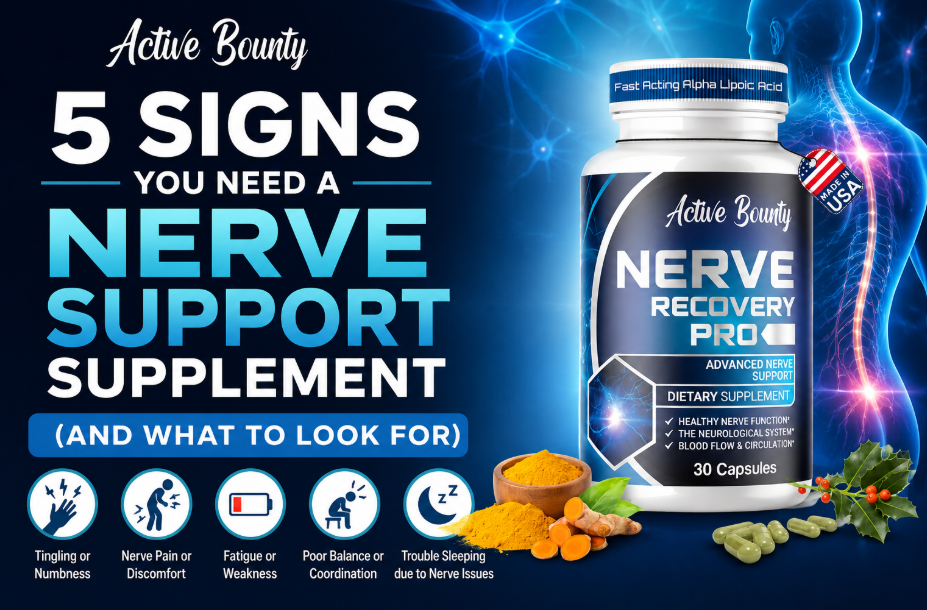
5 Signs You Need a Nerve Support Supplement (And What to Look For)
Nerve discomfort has a way of creeping in quietly. A little tingling in your fingers after a long day of typing. A burning sensation in your feet you chalk up to new shoes. Occasional numbness you assume is just "sitting wrong." Most people don't think about nerve health until something forces them to — but by the time symptoms are hard to ignore, they've often been building for a while. This guide walks through the five most common signs that your nervous system may need extra support, what's actually happening in your body when these symptoms show up, and exactly what to look for in a nerve support supplement if you decide it's time to act.
What Is a Nerve Support Supplement, Exactly?
A nerve support supplement is a formula designed to support healthy nerve function, nerve signal transmission, and the body's natural nerve repair processes — typically through a combination of B vitamins, antioxidants like alpha lipoic acid, and other nutrients tied to nervous system health. Unlike a pain reliever, a nerve health supplement isn't designed to mask discomfort; it's formulated to support the underlying nerve function that discomfort is often a symptom of.
This distinction matters because it shapes what "working" actually looks like — nerve support supplements are generally about long-term nervous system support, not instant relief, which is important to understand before you start one.
5 Signs You Might Need a Nerve Support Supplement
Tingling or "Pins and Needles" Sensations
Occasional tingling after sitting cross-legged too long is normal. But if you're noticing tingling or pins-and-needles sensations in your hands, feet, or fingers regularly — especially without an obvious cause like pressure or cold — it can be an early sign that nerve signaling isn't functioning optimally.
Numbness in Your Hands or Feet
Numbness that comes and goes, particularly in the extremities, is one of the most commonly reported early symptoms of nerve-related discomfort. It's often most noticeable at night or after periods of inactivity.
Burning or Sharp, Shooting Sensations
Unlike dull, achy pain, nerve-related discomfort often presents as a burning, electric, or sharp shooting sensation — frequently described as feeling like it's coming from inside the limb rather than the skin or muscle itself.
Increased Sensitivity to Touch
If things that never used to bother you — socks, bedsheets, a light touch — suddenly feel uncomfortable or even painful, that heightened sensitivity (sometimes called allodynia) can be connected to how your nerves are processing signals.
Muscle Weakness or Balance Issues
Because nerves control muscle signaling, ongoing nerve stress can sometimes show up as subtle weakness, clumsiness, or balance issues — particularly in the lower legs and feet, where peripheral nerves travel the longest distance from the spinal cord.
Important note: These signs are common and often manageable, but they can also indicate underlying conditions like diabetic neuropathy, vitamin deficiencies, or other medical issues that deserve a doctor's evaluation — especially if symptoms are persistent, worsening, or affecting your daily life. A supplement is a support tool, not a diagnosis or a replacement for medical care.
What to Look for in a Nerve Support Supplement
Once you've decided a nerve health supplement is worth exploring, not all formulas are built the same. Here's what actually matters:
- Alpha lipoic acid (ALA) — one of the most researched ingredients in this category, commonly included for its antioxidant properties and its studied role in supporting healthy nerve function.
- B vitamins (B1, B6, B12) — essential nutrients tied directly to nerve health and the maintenance of the protective myelin sheath around nerve fibers; B12 deficiency in particular is a well-documented cause of nerve-related symptoms.
- Clearly stated, clinically relevant dosing — avoid "proprietary blend" labels that hide actual ingredient amounts; look for specific milligram dosages instead.
- Third-party testing and GMP certification — manufacturing standards matter as much as the ingredient list itself, especially for a supplement you may take consistently over months.
- A formula free of unnecessary fillers — clean-label formulas (non-GMO, minimal additives) are generally a better long-term choice for daily use.
How Nerve Support Supplements Actually Work
Rather than blocking discomfort the way an over-the-counter pain reliever might, nerve support supplements are designed to work with the body's own nerve maintenance processes — supporting antioxidant defenses around nerve tissue, supplying the specific B vitamins nerves depend on for healthy signaling, and supporting the body's natural nerve repair mechanisms over time. This is why consistency matters more than any single dose: most people report noticing changes over weeks of regular use, not days.
Finding a Nerve Support Supplement You Can Trust
If you've recognized a few of the signs above, the next step is choosing a formula built around real, well-researched ingredients rather than vague marketing claims. Active Bounty's Nerve Recovery Pro is formulated with alpha lipoic acid and essential B vitamins specifically for nerve health support, made in an FDA-registered, GMP-certified facility — checking every box on the list above.
Nerve health rarely exists in isolation either — stress and energy metabolism both interact with how your body manages nerve function over time. Many people pair nerve support with ashwagandha for stress resilience or NAD+ for cellular energy support, depending on their specific goals — an approach we break down further in our guide on building a daily supplement stack.
You can browse the complete lineup on the Active Bounty shop page to see which combination fits your routine.
Frequently Asked Questions
This article is for informational purposes only and is not intended as medical advice. Persistent tingling, numbness, or nerve-related discomfort should be evaluated by a healthcare provider, as these can be signs of underlying medical conditions. Supplements are not intended to diagnose, treat, cure, or prevent any disease. Consult your healthcare provider before starting any new supplement, especially if you are pregnant, nursing, or taking medication.