

Blog
Best Organic Ashwagandha Supplement: How to Choose a Pure, Effective Brand

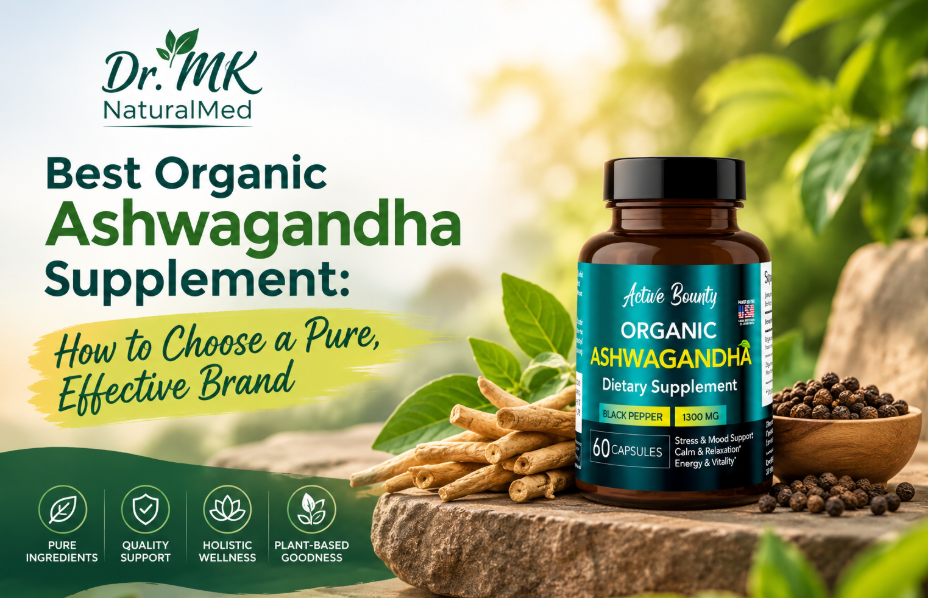
Best Organic Ashwagandha Supplement: How to Choose a Pure, Effective Brand
Walk into any supplement aisle or scroll through any online store and you will find dozens of ashwagandha products, all promising calmer days, better sleep, and more energy. The labels look similar, but the quality behind them can be very different.
If you are searching for the best organic ashwagandha supplement, this guide explains what actually matters: where the herb is grown, how it is processed, what the label should tell you, and how to tell a well-made product from a weak one.
What Is Ashwagandha?
Ashwagandha (Withania somnifera) is a shrub used for centuries in Ayurveda, India's traditional system of medicine. It is classed as an adaptogen, a term for herbs traditionally used to help the body cope with physical and mental stress. The root is the part most often used in supplements.
Modern research has studied ashwagandha mainly for its possible effects on stress, sleep quality, and general well-being. Results vary between studies and between products, which is one more reason to choose your supplement carefully.
Why Choose an Organic Ashwagandha Supplement?
Ashwagandha is a root crop, and roots absorb what is in the soil around them. That makes growing conditions important. Choosing organic gives you several advantages:
- Fewer synthetic residues. Organic farming restricts synthetic pesticides and chemical fertilizers.
- Cleaner sourcing. Reputable organic brands generally keep closer track of where their raw material comes from.
- Better fit for a daily habit. Ashwagandha is usually taken for weeks or months, so the quality of what you consume repeatedly matters more than for an occasional supplement.
"Organic" on the front of a bottle is not enough on its own. Look for clear information on the label or the brand's website about how the claim is backed.
How to Choose the Best Organic Ashwagandha Supplement
Check the Plant Part Used
Look for the root on the label. Some products use leaf or a root-and-leaf blend, which has a different profile. Root is the traditional and most researched part.
Look at the Dose per Serving
Doses on the market vary widely, from a few hundred milligrams to well over a thousand per serving. Check the per-serving amount, and check how many capsules make up a serving, since a "1,300 mg" claim can mean very different things depending on the label.
Pay Attention to Absorption
Some formulas add black pepper extract (piperine), which is commonly included in supplements to support absorption of herbal ingredients. If you prefer a formula built with absorption in mind, this is a useful feature to look for.
Read the Full Ingredient List
The best organic ashwagandha supplements keep the list short. Watch for:
- Unnecessary fillers or flow agents
- Artificial colours and sweeteners
- Proprietary blends that hide the exact amount of each ingredient
Look for Transparency and Testing
A trustworthy brand is open about sourcing and quality checks. Prefer brands that clearly state what testing is done and are willing to share details when asked.
Match the Form to Your Routine
- Capsules: simple, consistent dosing, no taste
- Powder: flexible, but earthy in taste
- Gummies: easy to take, but they often contain added sugar and lower amounts of the herb
Be Realistic About Claims
Be cautious of any product that promises dramatic or instant results. Ashwagandha is typically taken consistently over several weeks, and individual responses differ.
Quick Checklist: What to Look for on the Label
| Check | What good looks like |
|---|---|
| Plant part | Root |
| Sourcing | Organic, with clear information |
| Serving size | Clearly stated amount per serving |
| Absorption support | Black pepper (piperine) or similar |
| Other ingredients | Short, simple list |
| Transparency | Brand shares sourcing and testing details |
A Formula Built Around These Criteria
If you want a product that ticks several of these boxes, take a look at our Organic Ashwagandha 1300mg with Black Pepper for Enhanced Absorption. It pairs organic ashwagandha with black pepper to support absorption, and it is designed for people who want a straightforward daily supplement without a long list of extras.
You can also browse our full supplement range here to compare other options.
How to Take Ashwagandha
- Follow the label. Always use the serving size on your product, and do not exceed it.
- Be consistent. Take it at the same time each day so it becomes part of your routine.
- Take it with food if it upsets your stomach on an empty stomach.
- Give it time. Ashwagandha is generally used over several weeks rather than for a one-off effect.
Who Should Be Careful?
Ashwagandha is not suitable for everyone. Speak to a doctor before using it if you:
- Are pregnant or breastfeeding
- Have a thyroid condition
- Have an autoimmune condition
- Take prescription medication, especially sedatives, thyroid medicine, or immunosuppressants
- Have a scheduled surgery
Stop use and seek medical advice if you notice any unusual symptoms.
Final Thoughts
The best organic ashwagandha supplement is not necessarily the most expensive or the one with the biggest claims. It is the one that uses root, states its dose clearly, comes from a transparent organic source, keeps ingredients simple, and fits into your daily routine.
Use the checklist above, read labels carefully, and choose a brand you can trust. If you are ready to try one, explore our Organic Ashwagandha 1300mg with Black Pepper or see everything on our products page.
Frequently Asked Questions (FAQs)
This article is for general information only and is not medical advice. Dietary supplements are not intended to diagnose, treat, cure, or prevent any disease. Consult a qualified healthcare professional before starting any supplement.