

Blog
NAD+ vs. NMN: What’s the Difference, and Which Should You Take?

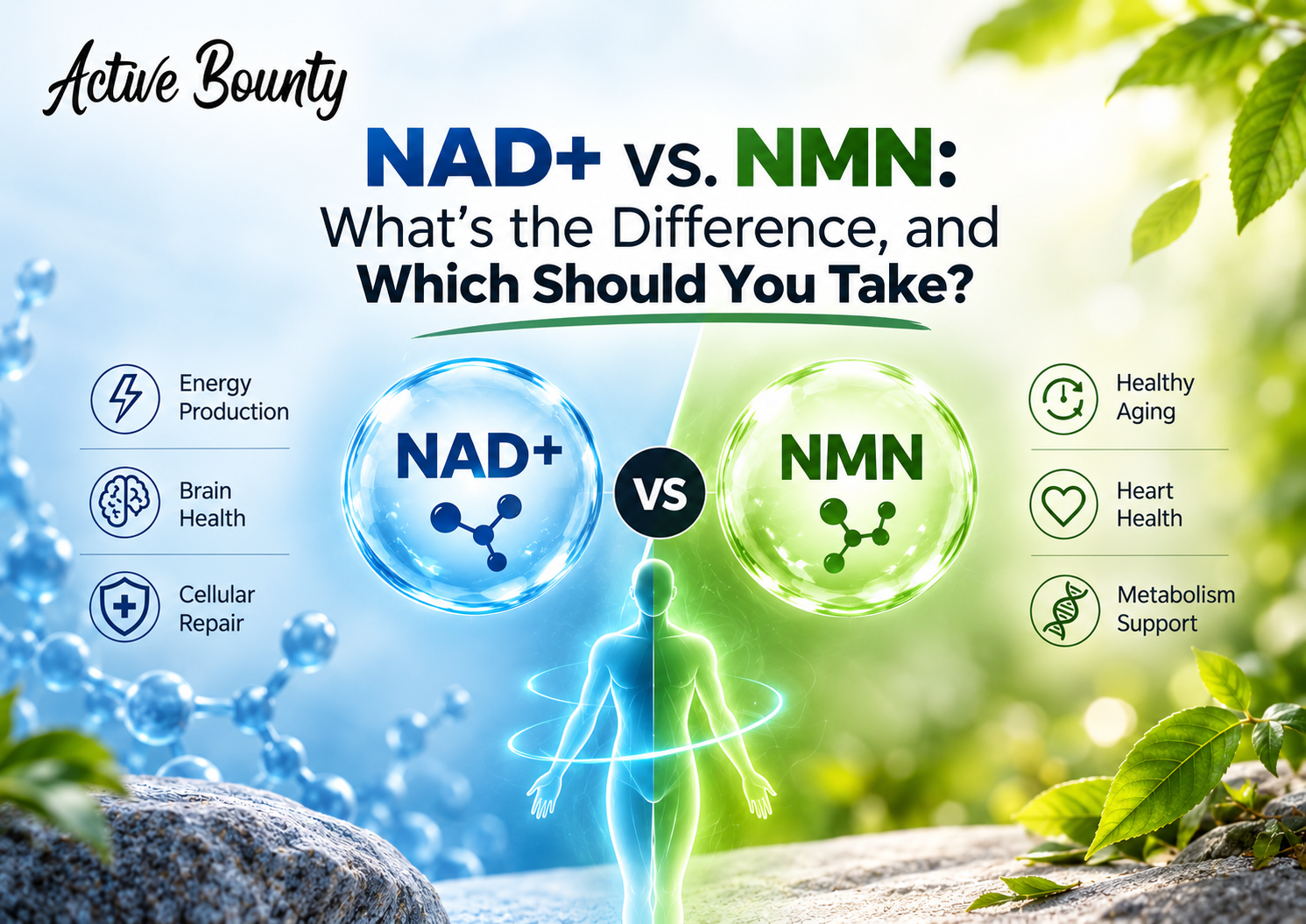
NAD+ vs. NMN: What's the Difference, and Which Should You Take?
If you've spent any time researching cellular energy or longevity supplements, you've likely run into two terms used almost interchangeably: NAD+ and NMN. They're related, but they're not the same thing, and understanding the difference actually matters when you're deciding what to buy. This guide breaks down what each one is, how they relate to each other, and what actually determines which supplement gives you the best results — which often comes down to more than just the precursor name on the label.
What Is NAD+?
NAD+ (nicotinamide adenine dinucleotide) is a coenzyme found in every cell in the body, playing a central role in cellular energy metabolism, mitochondrial function, and DNA repair. NAD+ levels are well-documented to decline naturally with age, which is why supporting healthy NAD+ levels has become one of the most talked-about strategies in the healthy-aging and cellular energy space.
Here's the catch that trips a lot of people up: NAD+ itself doesn't absorb well when taken orally. The molecule is too large and unstable to survive digestion intact in meaningful amounts. This is exactly why most supplements labeled "NAD+" don't actually contain raw NAD+ — they contain a smaller, more bioavailable precursor compound that the body converts into NAD+ after absorption.
What Is NMN?
NMN (nicotinamide mononucleotide) is one of those precursor compounds — a smaller molecule that sits one step upstream of NAD+ in the body's natural synthesis pathway. Once absorbed, NMN is converted into NAD+ through the body's own enzymatic processes. NMN, along with NR (nicotinamide riboside), is one of the two most commonly used precursors in NAD+-boosting supplements today, precisely because raw NAD+ supplementation isn't practical.
So in a sense, "NAD+ supplement" and "NMN supplement" often describe the same underlying strategy — supporting the body's NAD+ production through a precursor — just labeled differently depending on the brand's marketing approach.
So What's Actually Different Between Them?
This is where the real decision-making factors come in, and they matter more than the precursor name itself:
Labeling and marketing, not necessarily mechanism.
A product labeled "NAD+ supplement" using a precursor compound and a product labeled "NMN supplement" may be doing functionally similar things in the body. The label often reflects branding choices more than a fundamental scientific difference.
What the precursor is paired with.
This is the factor that actually tends to differentiate one product from another. A precursor alone supports NAD+ production, but complementary ingredients — particularly resveratrol and quercetin — are commonly added because they support antioxidant activity and, in the case of quercetin, may enhance absorption. Many single-ingredient NMN products on the market skip this step entirely, offering the precursor alone without additional support.
Dose and formulation quality.
Regardless of which precursor a product uses, dose transparency, third-party testing, and GMP-certified manufacturing matter far more to actual effectiveness than which specific precursor compound sits on the label.
Why a Combination Formula Often Makes More Sense Than NMN Alone
Since NAD+ precursor supplementation is fundamentally about supporting cellular energy metabolism, and resveratrol is separately studied for its antioxidant properties, pairing the two addresses more of the picture than a single-ingredient NMN product does on its own. Quercetin adds a further layer of antioxidant support and is commonly included to aid absorption of the overall formula. In other words: the precursor gets NAD+ production started, and the supporting ingredients round out the formula rather than leaving you to source antioxidant support separately.
This is exactly the formulation approach behind Active Bounty's NAD+ Resveratrol Supplement with Quercetin — a high-potency 500mg formula built around this precursor-plus-antioxidant combination, rather than an isolated NMN capsule with nothing else supporting it. Manufactured in an FDA-registered, GMP-certified facility, it's designed to address cellular energy support and antioxidant activity together, in one formula.
What to Actually Look for When Choosing Between the Two
Instead of getting stuck on the "NAD+ vs. NMN" label debate, evaluate any product against this checklist:
- A clearly stated, meaningful dose — not a vague "proprietary blend"
- Complementary ingredients like resveratrol and quercetin, rather than a single isolated compound
- Third-party testing and GMP certification
- Manufacturing transparency — an FDA-registered facility and clean-label formulation (non-GMO, minimal fillers)
A well-formulated combination product will generally offer more complete support than a bare-bones single-ingredient NMN capsule, regardless of which precursor either one technically uses.
Where to Go From Here
If you're deciding between a standalone NMN supplement and a more complete NAD+ resveratrol formula, the combination approach is generally the stronger choice — you get NAD+ precursor support plus antioxidant activity in a single, well-formulated product rather than needing to stack multiple supplements to cover the same ground. Active Bounty's NAD+ Resveratrol Supplement with Quercetin is built around exactly this approach.
For more on why this category has grown so quickly, see our guide on why NAD+ supplements are booming in 2026, or if you're comparing NAD+ against other wellness priorities entirely, our guide on NAD+ vs. Ashwagandha vs. Nerve Support can help you decide where to start. You can browse the full lineup on the Active Bounty shop page as well.
Frequently Asked Questions
This article is for informational purposes only and is not intended as medical advice. Supplements are not intended to diagnose, treat, cure, or prevent any disease. Consult your healthcare provider before starting any new supplement, especially if you are pregnant, nursing, or taking medication.