

Blog
What Is Organic Ashwagandha? Benefits, Uses & How to Choose It

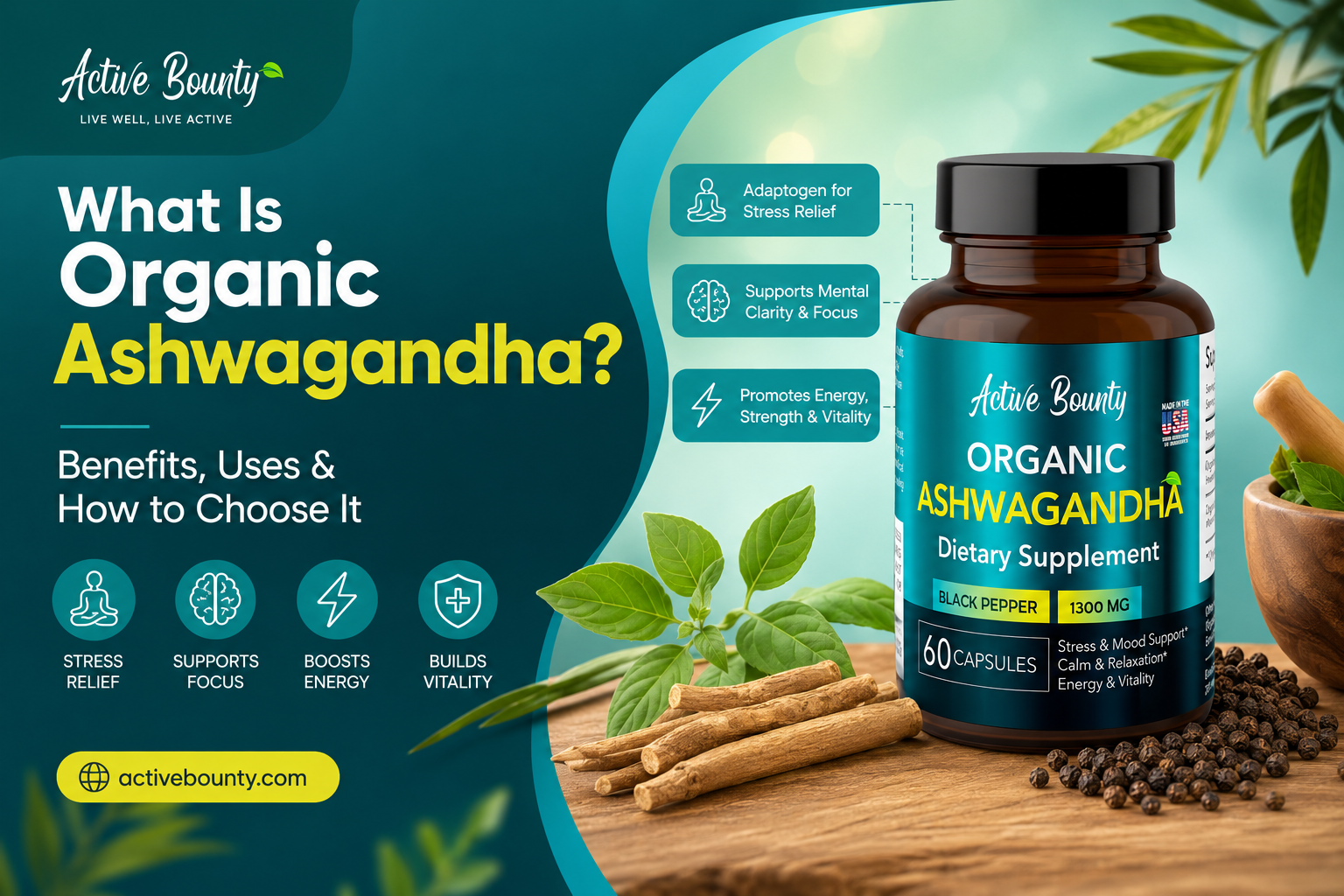
What Is Organic Ashwagandha? Benefits, Uses & How to Choose It
Everything you need to know about organic Ashwagandha — its potential benefits, how it's used, possible side effects, and what to look for before adding it to your wellness routine.
Ashwagandha, scientifically known as Withania somnifera, is an herb traditionally used in Ayurvedic and Unani medicine. Today, it is widely available as a dietary supplement and has become particularly popular among people looking for natural wellness products.
Research has explored Ashwagandha for several potential uses, with some of the most promising evidence relating to stress and sleep. However, research is still developing, and results can vary depending on the specific Ashwagandha preparation, dosage, and individual.
In this guide, we'll explain what organic Ashwagandha is, its potential benefits, common uses, possible side effects, how it is used, and what to consider before adding an Ashwagandha supplement to your wellness routine.
What Is Ashwagandha?
Ashwagandha is an evergreen shrub native to parts of India, Africa, and the Middle East. Its scientific name is Withania somnifera. It is also commonly known as Indian ginseng or winter cherry, although it isn't actually part of the ginseng family.
The plant contains naturally occurring compounds called withanolides, along with other phytochemicals. These compounds are among the reasons Ashwagandha has attracted scientific interest.
Ashwagandha has a long history of use in traditional wellness practices, particularly Ayurveda. Modern dietary supplements commonly use Ashwagandha preparations made from the plant's root or from root and leaf extracts.
Today, people commonly search for Ashwagandha supplements for:
- Stress support
- Relaxation
- Sleep support
- Energy and vitality
- General wellness
But what exactly does organic Ashwagandha mean?
What Is Organic Ashwagandha?
Organic Ashwagandha refers to Ashwagandha produced using organic agricultural and processing standards applicable to the product.
The word organic primarily describes how an agricultural ingredient is grown and handled. It doesn't automatically mean that an organic supplement has greater health benefits than a non-organic supplement.
When choosing an organic Ashwagandha supplement, it's still important to look at the complete product information, including its ingredients, serving size, sourcing, manufacturing information, and labeling.
For consumers who specifically prefer organic ingredients, an organic Ashwagandha supplement can be a convenient way to incorporate this traditional herb into a daily wellness routine.
What Are the Potential Benefits of Organic Ashwagandha?
The potential benefits of Ashwagandha are one of the main reasons this herb has become so popular.
However, it's important to separate research-supported potential benefits from broad marketing claims.
1. Ashwagandha May Support Stress Management
Ashwagandha for stress is one of the most researched areas involving this herb.
Several clinical studies have investigated Ashwagandha extracts in adults experiencing stress. Results from a number of these studies suggest that certain Ashwagandha preparations may help reduce perceived stress and may also influence cortisol levels.
This is why Ashwagandha is increasingly included in wellness routines designed around stress support and relaxation.
However, Ashwagandha shouldn't be viewed as a treatment for a mental health condition. If you're experiencing persistent or severe stress or anxiety, professional medical support is important.
2. Ashwagandha May Support Sleep
Another area of growing interest is Ashwagandha for sleep.
Research involving Ashwagandha extracts suggests that supplementation may modestly improve certain aspects of sleep, including sleep quality, sleep efficiency, total sleep time, and the time it takes to fall asleep. Benefits appear to be more noticeable in some people experiencing insomnia.
That said, research has involved different Ashwagandha preparations and dosages, so the results shouldn't automatically be applied to every product.
Ashwagandha also shouldn't replace healthy sleep habits such as maintaining a consistent sleep schedule, limiting excessive screen exposure before bed, and creating a comfortable sleeping environment.
3. May Support Calm and Relaxation
Ashwagandha is traditionally associated with helping the body adapt to everyday stressors, which is one reason it is often described as an adaptogenic herb.
Modern research has also investigated its relationship with perceived stress and anxiety.
For someone building a wellness routine around calm and relaxation, Ashwagandha may therefore be an ingredient worth exploring.
4. May Support Everyday Energy and Vitality
Ashwagandha is also commonly used in wellness products positioned around energy and vitality.
However, evidence for Ashwagandha's effects on areas outside stress and sleep is less established. NIH sources note that there isn't enough evidence to determine whether Ashwagandha provides benefits for several other conditions and outcomes, including athletic performance and cognitive function.
So it's better to avoid treating Ashwagandha as an all-purpose solution for every wellness concern.
Organic Ashwagandha vs. Regular Ashwagandha
One question consumers often ask is whether organic Ashwagandha is different from regular Ashwagandha.
The primary distinction is organic sourcing and production standards, not a completely different herb.
Both come from the same plant, Withania somnifera. What differentiates an organic product is the way its agricultural ingredients are grown, handled, and certified according to applicable organic requirements.
If organic sourcing is important to you, check the product label and certification information rather than assuming that every product labeled "natural" is organic.
How Is Ashwagandha Taken?
Ashwagandha supplements are available in several forms, including:
- Ashwagandha capsules
- Ashwagandha powder
- Herbal extracts
- Root-based preparations
- Root and leaf preparations
Ashwagandha capsules are particularly convenient for people who prefer a simple daily supplement routine because they don't require measuring or mixing.
The appropriate serving depends on the specific product. Always follow the serving instructions provided on the product label instead of assuming that taking more will produce better results.
Why Choose Organic Ashwagandha Capsules?
For consumers who prefer a simple supplement routine, organic Ashwagandha capsules can provide a convenient way to incorporate Ashwagandha into everyday wellness.
Organic Ashwagandha 1300mg with Black Pepper for Enhanced Absorption
Active Bounty offers Organic Ashwagandha 1300mg with Black Pepper for Enhanced Absorption as its Ashwagandha product. The product is positioned around stress and mood support, calm and relaxation, and energy and vitality, and is offered in a convenient capsule format.
If you're considering an organic Ashwagandha supplement, look beyond the front label and evaluate the complete ingredient information, serving instructions, sourcing, and manufacturing details.
You can browse Active Bounty's full range of wellness products in the shop.
What Are Withanolides in Ashwagandha?
Withanolides are naturally occurring compounds found in the Ashwagandha plant and are one of the main groups of compounds studied in modern research on Withania somnifera.
These compounds are present in different concentrations depending on factors such as the plant part used, growing conditions, and the type of extract or preparation.
This is important because not all Ashwagandha supplements are chemically identical. Root extracts, root-and-leaf preparations, and different extraction methods can result in different levels and profiles of naturally occurring compounds.
When comparing Ashwagandha supplements, looking at the type of preparation and the ingredient information can therefore provide more context than simply comparing the amount listed on the front of the bottle.
For consumers interested in organic Ashwagandha, understanding these naturally occurring plant compounds can also make it easier to evaluate product labels and choose a supplement that matches their preferences.
Who Should Avoid Ashwagandha?
Ashwagandha may not be appropriate for everyone.
According to the National Center for Complementary and Integrative Health, Ashwagandha should be avoided during pregnancy and isn't recommended while breastfeeding. It may also be inappropriate for people preparing for surgery or those with certain thyroid or autoimmune disorders.
Ashwagandha may also interact with certain medications, including some medicines for:
- Diabetes
- High blood pressure
- Thyroid conditions
- Seizures
- Immune suppression
- Sedation
Anyone taking prescription medication or managing an existing health condition should speak with a qualified healthcare professional before using an Ashwagandha supplement.
Still unsure if this is right for you? Contact us and we're happy to help.
How Long Does Ashwagandha Take to Work?
There isn't a guaranteed timeframe for when you'll notice an effect from Ashwagandha.
Clinical studies have used different preparations, serving amounts, and durations. Research on stress has commonly examined periods of several weeks, while sleep studies have also evaluated longer supplementation periods.
Therefore, it's not realistic to assume that everyone will experience the same results after taking Ashwagandha for a particular number of days.
Consistency, product formulation, individual circumstances, and overall lifestyle can all matter.
What Should You Look for in an Organic Ashwagandha Supplement?
If you're shopping for an organic Ashwagandha supplement, consider the following:
Clear ingredient information
The label should clearly tell you what the product contains and how much you're expected to take.
Transparent serving instructions
Avoid guessing your serving. Follow the manufacturer's recommended use.
Organic information
If organic sourcing matters to you, look for appropriate certification or documentation rather than relying solely on the word "organic" in marketing.
Manufacturing information
Look for information about where and how the supplement is produced.
Simple formulation
If you prefer a straightforward wellness routine, a simple capsule-based Ashwagandha product may be easier to incorporate consistently.
Frequently Asked Questions About Organic Ashwagandha
Find quick answers to common questions about organic Ashwagandha and how it fits into everyday wellness.
The Bottom Line
So, what is organic Ashwagandha?
Organic Ashwagandha is an organically produced form of Withania somnifera, a traditional herb that has been used for centuries and is now widely available as a dietary supplement.
Research suggests that some Ashwagandha preparations may support stress management and certain aspects of sleep, while evidence for several other popular claims remains limited.
If you're looking for a simple way to incorporate Ashwagandha into your wellness routine, an organic Ashwagandha supplement in capsule form can be a convenient option. Active Bounty's Organic Ashwagandha is positioned around stress and mood support, calm and relaxation, and energy and vitality.
The key is to choose supplements carefully, follow the recommended serving, and consider your individual health circumstances before starting any new supplement.
Ready to Try Organic Ashwagandha?
Explore Active Bounty's Organic Ashwagandha 1300mg with Black Pepper and make it part of your everyday wellness routine.
Shop Organic AshwagandhaMedical disclaimer: This article is for general educational purposes and isn't medical advice. Dietary supplements aren't intended to diagnose, treat, cure, or prevent disease. Consult a qualified healthcare professional before using Ashwagandha, particularly if you are pregnant, breastfeeding, taking medication, preparing for surgery, or managing a health condition.